
Hundreds of tiny forests
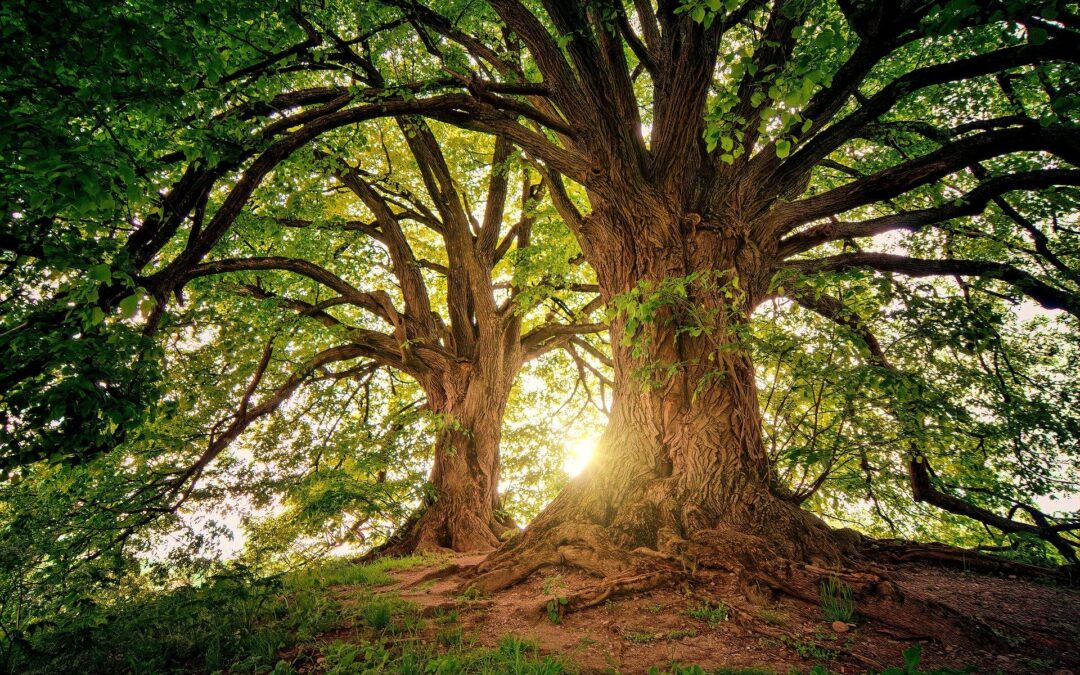
Akira Miyawaki is a Japanese botanist who pioneered the Miyawaki method of planting micro forests in cities. They usually cover an area no bigger than a tennis court and entail doing a really dense planting of native trees, usually around three per square metre, on ground that has been given a lot of nutrient. That’ll mean somewhere between 600 to a 1000 trees in that tiny area. Over a hundred of these have been planted in Holland, England got her first one in Witney last year, with government funding for another 12, and there are now about 3,000 planted worldwide. Detailed studies of them have shown that they grow around five times faster than traditional monoculture tree-planting schemes and quickly become a magnet for bio-diversity, with one tiny forest found to have already attracted 600 species of plants and animals. Lahore in Pakistan planted their first one a year ago and the results have been so impressive that they are now adding another 50 in the city. 🌳
In Northern Ireland an anonymous environmental super hero has been planting trees under the cover of darkness
For years trees have been magically materialising overnight in Belfast housing estates, community gardens and even in the Mourne Mountains. A local paper managed to speak to him and learnt that the aim of what he calls his "environmental graffiti" is to get people to fall in love with nature. 🦸♂️💚

She's been quietly planting trees since the 1940s
Tree planting heroes come in every shape and size. It’s reckoned that Saalumarada Thimmakka, a woman from India, has planted over 8,000 trees, including 384 banyan trees along her nearest highway. Despite being 109 years old she is still planting, albeit with a bit of help these days. 🦸🏽♀️👍
Saudi Arabia to plant 50 Billion Trees!
And at the other end of the scale, Saudi Arabia has announced plans to plant 50 billion trees, 10 billion in Saudi itself and then a further 40 billion among its Middle Eastern neighbours. Looks like Mohammed bin Salman just had to have ‘the largest reforestation program in the world’, but then Saudi’s carbon footprint has been one of the largest too.
Handing Back Control
Protecting existing forest is a challenge in itself and just declaring areas to be national parks can lead to conflict and illegal logging. There’s growing evidence in many parts of the world that simply giving indigenous peoples control over the forest which they have called home for generations can be the best, and most cost-effective, way of safeguarding its future. In Peru the Asháninka people have responded to being given control of their forests by cutting tree loss by over 70%. In the Rede de Sementes do Xingu area of Brazil efforts to replant trees using conventional methods failed until they tapped into the knowledge of the local Xingu women. They now run the scheme at a fraction of the cost and are sowing 10 times as many trees per hectare in ‘their’ forest than conventional methods could manage. In the Congo Basin, the largest remaining swathe of rainforest on Earth outside the Amazon, more than 260 community forests have been recognised and are being protected by local people who’ve been given land rights over their home forest. 🔒
The Return of the Dream
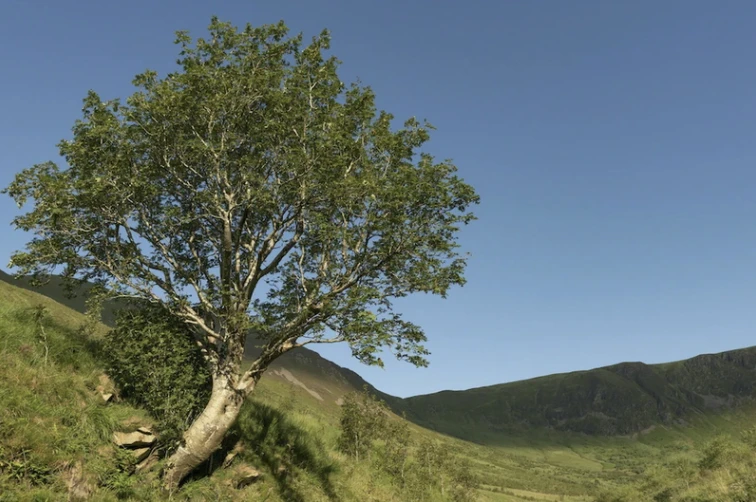
And lastly, in the sheep 🐑 grazed valley of Carrifran, in the Scottish borders, a single rowan, see below, was the last tree left in the whole valley. The dream was to create a woodland there and today, 25 years later, the sheep are gone and 700,000 trees surround that last survivor, and wilderness is slowly returning to Scotland. 🌳
Have a great weekend everyone,
John

– – – –
John Coordinates our Habitat subgroup. Do sign up to our mailinglist from the home page - then you can find out when our next event is too!