
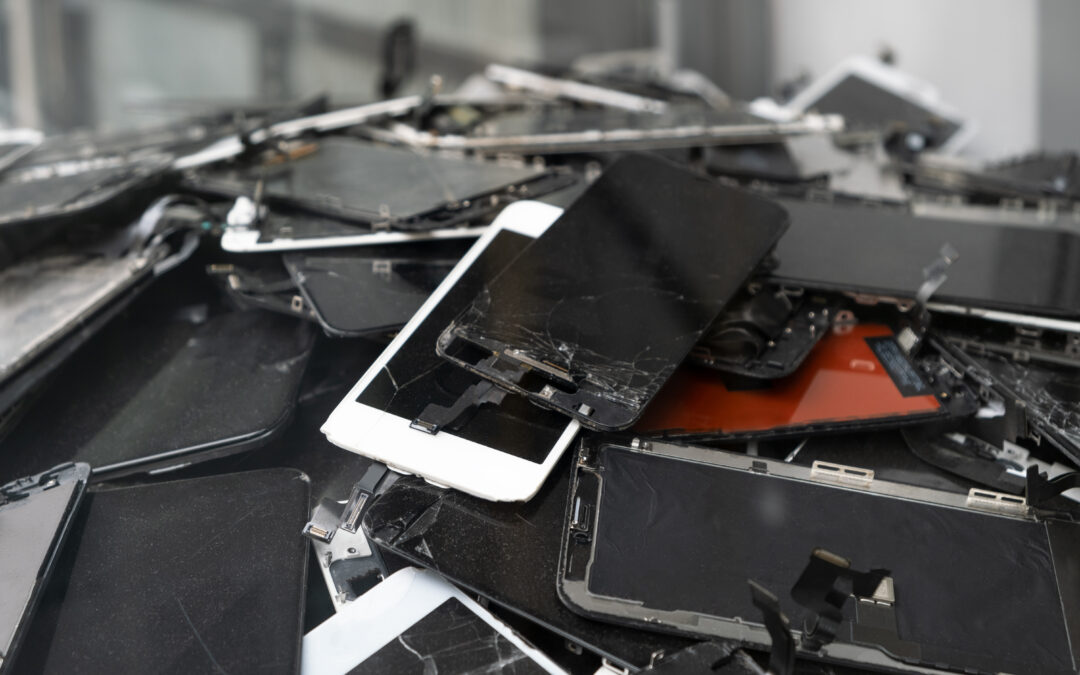
Like them or loath them, devices like smartphones, tablets, and laptops are part of our lives. There are around 9 per household in the UK, and there are probably over 20 million thrown away each year. There is an environmental impact each time one is manufactured, and then again when it has come to the end of its life. Luckily there are some things we can do to reduce these impacts.
Delay that upgrade
Mobile contracts can encourage us to upgrade, but it is worth thinking first whether it is truly needed. The latest new gadget may seem attractive, yet at the same time what we already have probably does a pretty good job. For example as most of us are not professional photographers do we really need that new giga-mega-pixel quadruple camera?
Live long and prosper
By taking care of the devices that we have, treating them with respect, protecting phones with a case and screen protector we can help to ensure that they have a long life, and that we get the best value for our outlay.
Buy 2nd hand
There are many ways to buy second hand devices from trusted sellers on Ebay, friends and family, or providers like aftermarket.com where you get the reassurance of a warranty. Not only does this stop a new device being made and so reduces the ecological cost, but it also saves you a lot of money.
Repair
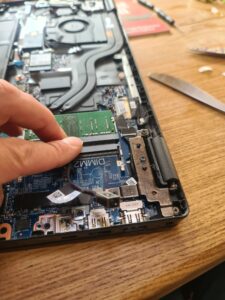
A minor mishap leading to a broken screen needn’t be a device’s death knell. If the charging socket no longer does the job and you’re tired of performing cable-acrobatics just to get it to charge, it doesn’t mean that it’s over! You can take it to a specialist for repair, or giving it a go yourself is cheaper, quicker and more empowering. There may be a repair cafe nearby where you can get guidance, and which is likely to have tools you can use.
For mobiles you will need a heat gun (get one or better yet borrow one), and some suitable glue. Often the glue comes along with a tiny kit of a few small screwdrivers, and plastic levers that you need for prising the parts apart. They don’t tend to make it easy, and it’s quite fiddly, but it is doable, and if you were going to throw it away anyway, what’s there to lose? Youtube is great – look for videos showing you exactly how to do each job, and I advise taking pictures as you go so that you can remember where each bit goes.

Be picky
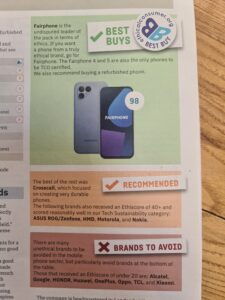
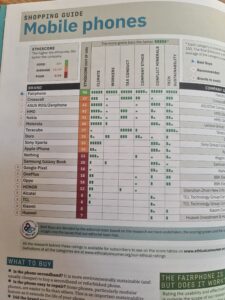
Not all brands are equal – you can research their ethical before you buy. An Ethical Consumer membership gives you access to ratings tables of a whole host of products and services. They do the time consuming work of researching and ranking suppliers by a whole range of criteria so you don’t have to.
As you can see Huawei, who made the phone I just repaired, is the worst ranking – I would have benefitted from seeing that table beforehand, although it was a second hand purchase at the time. Crosscall score very well and sound great with their focus on making rugged and repairable phones.
Recycle
Once a device’s life is over definitely don’t just throw it in the bin, recycle it properly. More info here: https://www.nhm.ac.uk/discover/what-is-ewaste-and-what-can-we-do-about-it.html
Improvements in the EU
The EU require that all new phones, tablets and cameras have USB type-C charging ports by the end of 2024, and laptops by 2026. Phone batteries must be replaceable in the EU by 2027, meaning that the back panels of new phones will go back to being easy to take off. France has required manufacturers to display Right to Repair which places requirements on manufacturers to provide a repair service and make their products easier to repair so as to promote re-use and a circular economy.
The UK is not part of the EU any more, so these laws won’t automatically apply here, but hopefully manufacturers will decide that the simplest approach is to supply the same, more repairable, products here too.